
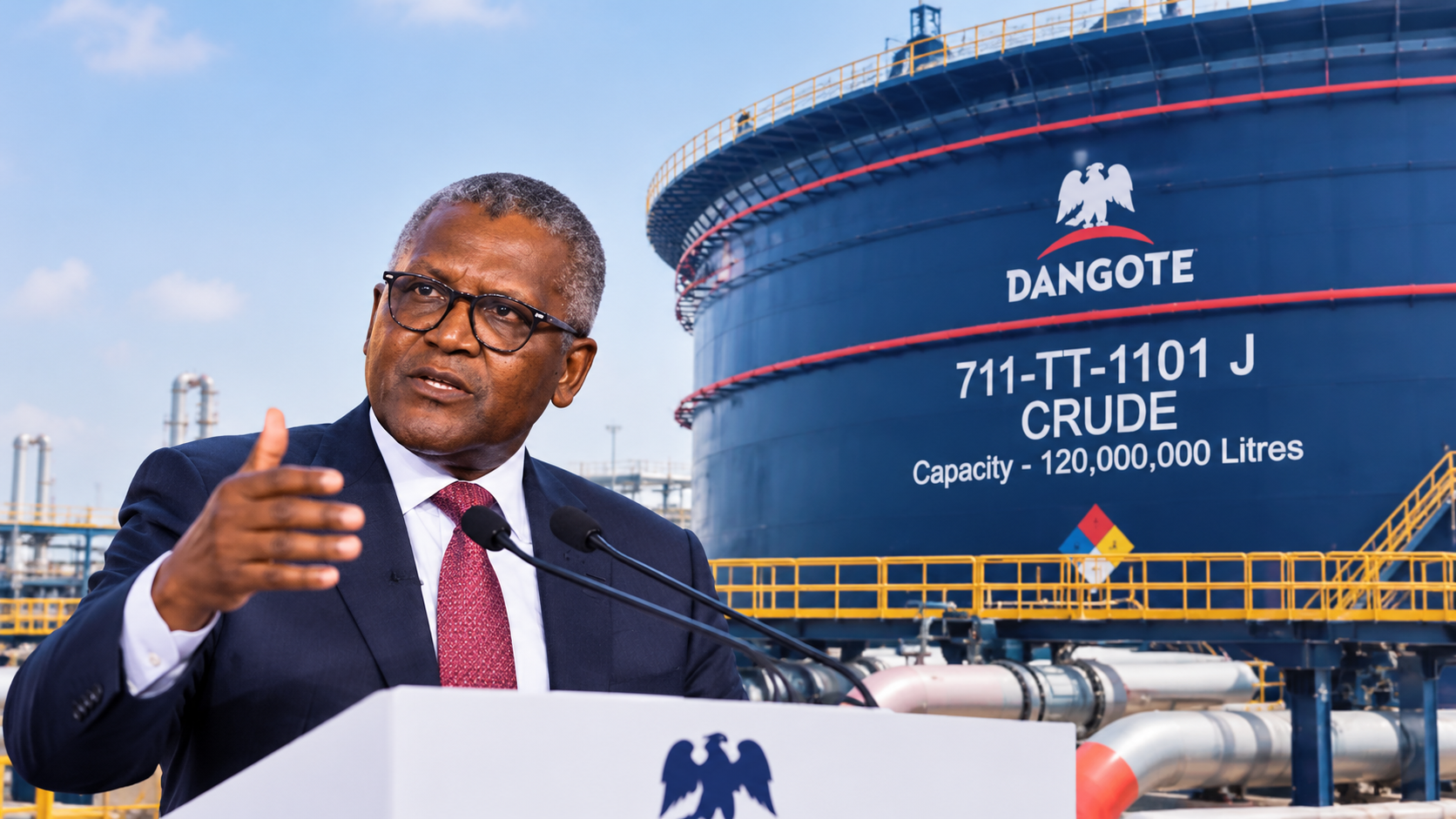
On September 14, Dangote Petroleum Refinery opened Africa's largest-ever share sale — 4.1 billion shares at ₦525 each. The company is targeting about ₦2.15 trillion, valuing the refinery at roughly $49 billion.
Within the first day, investors had already committed more than ₦1.4 trillion. That's a lot of money moving very quickly.
But here's the interesting part. Most of those investors will never walk into Dangote Refinery. They'll never sit in a meeting with the people running it. They're not buying because they personally know the business.
So what exactly are they looking at?
It Wasn't Just the Dangote Name
Dangote is one of the most recognisable business names in Africa. But a famous name alone doesn't justify billions of naira changing hands. Behind the name is a prospectus — financial statements, revenue, profit, debt, capacity, and years of information that investors and their advisers can examine before putting money in.
And that history tells an interesting story. The refinery reported a loss of nearly $476 million for the full year in 2025. Then, in the first half of 2026, it reported $13.9 billion in revenue and $1.82 billion in profit. That's a significant swing, and more importantly, it's documented. Nobody has to take Dangote's word for it — the numbers are there to be examined. That's what makes a track record valuable.
Whether People Believe in the Business or Doubt It, They Check the Same Thing
Not everyone agrees on whether ₦525 a share is good value. Some analysts see the refinery as a valuable, world-class asset; others think the price demands a lot from what the business has delivered so far.
But notice what both sides are actually looking at: the same revenue, the same margins, the same debt, the same capacity, the same consistency behind the numbers. They may disagree about what those numbers mean, but the numbers themselves are what make the disagreement possible.
That's the real lesson underneath the headlines. Whether people are positive about a business or sceptical of it, they eventually check the same thing: the track record.
You'll Never Run an IPO. Your Business Will Still Be Checked.
Most business owners will never prepare a prospectus or list on the Nigerian Exchange. You'll probably never have thousands of investors deciding whether to put money into your business.
But you will face smaller versions of the same question. A bank deciding whether to give you a loan. A supplier deciding whether to give you goods on credit. An investor considering buying into your business, or a partner considering funding your next branch. Even someone considering buying the business from you one day.
They all want to know the same thing Dangote's investors just answered for themselves: can this be proven, or is it just being said?
A Track Record Is a Record, Not a Story
This is where many small businesses struggle — not necessarily because the business is doing badly, but because there's little evidence to show how well it's actually doing.
“Sales have been growing” is a statement. Twelve months of sales figures, broken down by month, product and location, is a track record. “We don't really have bad debt” is a statement. A ledger showing exactly who owes you, how much, and for how long, is a track record. “My second branch is doing better” is a statement too — better than what, by how much, over what period, compared with which branch?
A story tells people what you believe about your business. A record shows them what has actually happened.
The Records You Keep Today Become Tomorrow's Evidence
When a business is small, record-keeping can feel like paperwork you're doing for its own sake. You make a sale, pay an expense, receive stock, move inventory to another location — record it, and move on with the day.
But those ordinary transactions are quietly building something: your business's history. Over time, that history can answer questions memory never will — which month was your strongest, which branch actually drives revenue, which products make you money, where your expenses are creeping up, how much stock is sitting where, who still owes you. That's not just bookkeeping. It's how you come to understand the business you're building.
This Is Where Simplebks Comes In
Simplebks turns those everyday activities into a record you can actually use. Sales are captured as they happen, expenses are logged, stock movements are tracked, and receivables, payables and branch performance are all there to compare.
So when someone eventually asks how the business has been performing, you're not trying to remember, digging through old notebooks, or scrolling months of WhatsApp messages. You can just look at the record — and that record becomes more valuable the longer the business runs.
The Bottom Line
Dangote didn't attract over ₦1.4 trillion in a single day just because people recognise the name. Behind the name is a record — one that can be examined, questioned and compared.
You may never take your business public, and you may never need billions of naira from investors. But one day, someone — a bank, an investor, a partner, a supplier, or even you — will want to know whether your business is as good as you say it is. When that happens, the question won't be “how is the business doing?” It will be: “what does the record show?”
Build that record now. Don't wait until someone asks to see it.
Start free at simplebks.com